Ben Pennington
Finalist
Ohio University
$1,500 Scholarship and Hearst Medallion
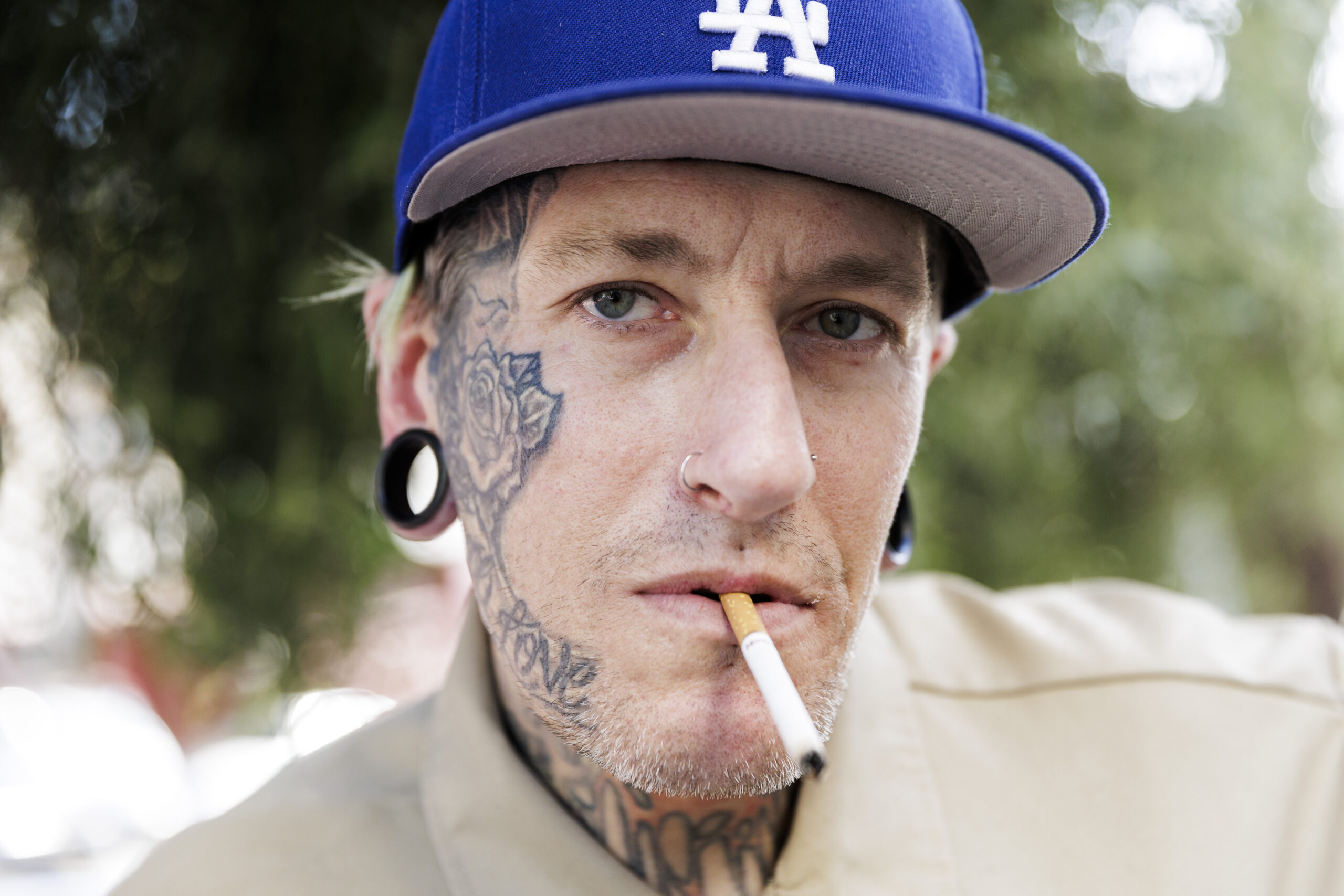 Taylor Klahn smokes a cigarette across the street from the Walden House sober living environment facility on Sunday, May 31, 2026, in San Francisco, California.
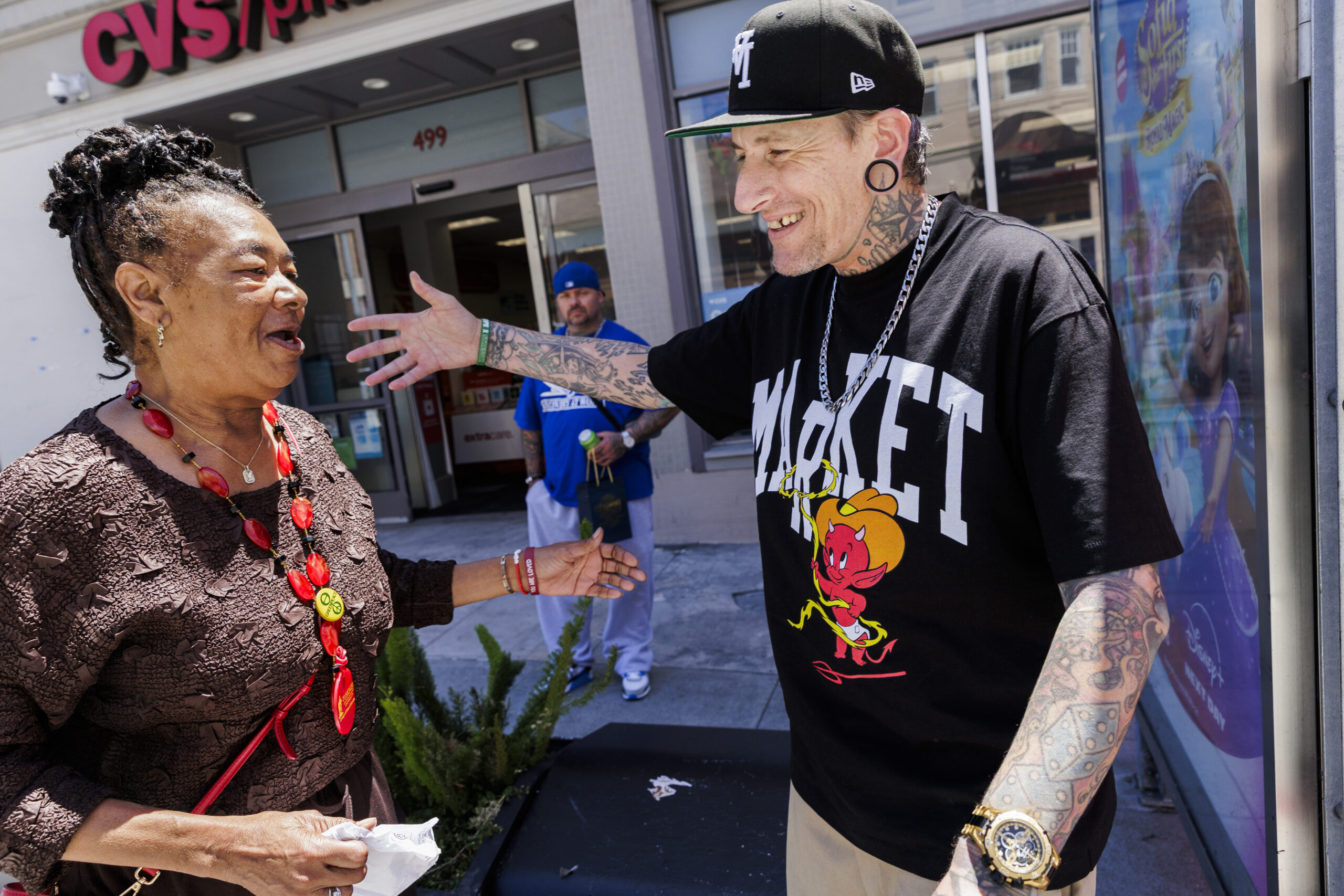
Klahn has lived a tumultuous life—one full of mistakes, hardship, and great personal change. Klahn, now 43, grew up in Southern California and was involved in gang violence as a young man. His time in gangs shaped his youth, it also landed him in prison. “I grew up in a really bad neighborhood,” said Klahn, who recalls stealing cars for drug traffickers by the time he was 13-14 years of age. Reflecting on his past, Klahn says. “I really didn't think I was gonna be alive this long.” Taylor Klahn (right) reaches out to hug Cheryl Mullins, a friend he met through a Hepatitis C awareness group, while walking along Haight St. on Monday, June 1, 2026, in San Francisco, California.
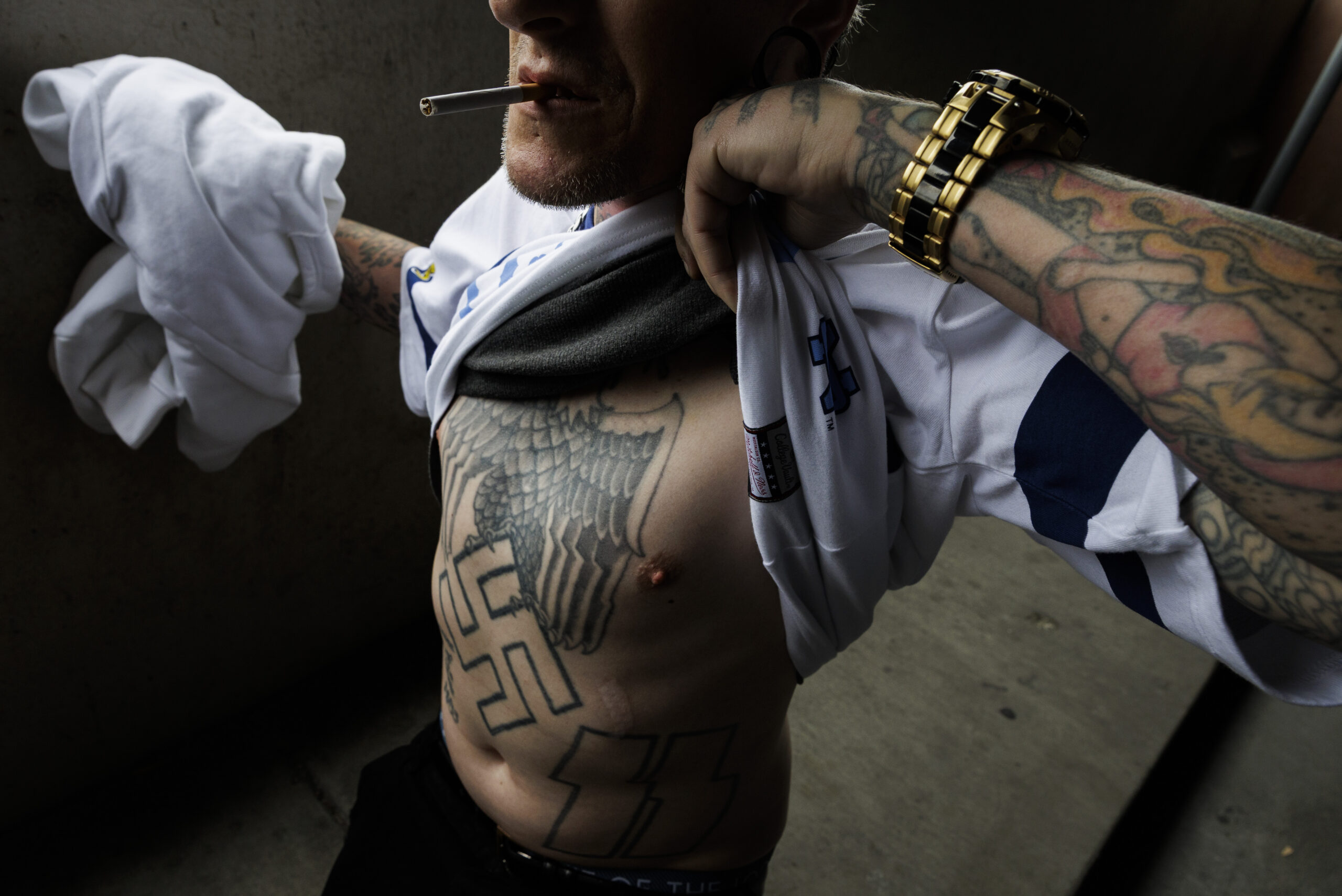
Klahn currently lives at Walden House in San Francisco, a sober living environment (SLE) facility offering residential and outpatient treatment for substance use disorders. Klahn himself has struggled with addiction on-and-off in the years following his time incarcerated. “I was into fentanyl; I died off of it too. I died like three times,” he said. As of June 2026, he’s been nine months sober and hopes to have a metalworking job before the end of the year after he completes a training program on Treasure Island this summer.- Taylor Klahn poses for a portrait showcasing his tattoos that he regretfully “earned” as a teenager during his time as a gang member in Southern California on Tuesday, June 2, 2026, at the Colma BART station near Daly City, California.
During his teenage years, Klahn was a white supremacist. The tattoos he bears serve as a reminder of a time in his life when he was a very different person, with extremely different, hateful beliefs. In hindsight, he thinks he was groomed by gang members to adopt a racist ideology. Growing up, Klahn felt like an outsider as an adopted child, and looked up to the older gang members he met on the street. For him, he found a sense of community in what he thought was the only option.
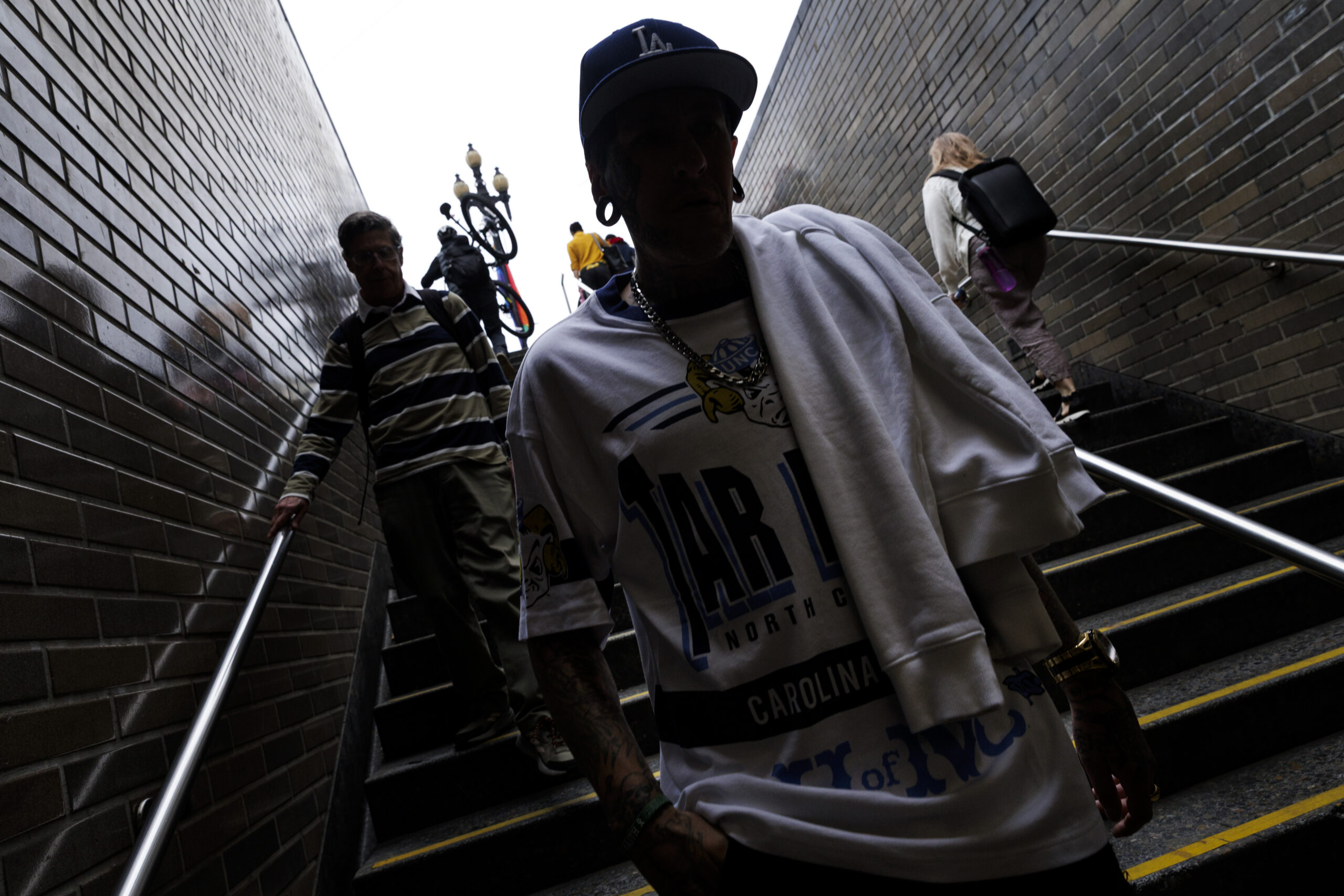
“They look for impressionable kids and they make you feel like you’re a part of something”, said Klahn. The conditioning led Klahn to the extreme, ready to risk his life for gang activity. He was terrified when he first “earned” the Schutzstaffel (SS) tattoo near his lower abdomen— given to him after he stabbed an older rival gang member during a fight. After enough time, Klahn believes “It gets to a point where you’re really desensitized to violence.” - Taylor Klahn walks into Civic Center BART Station while on the way to meet up with his girlfriend, Joanna, on Tuesday, June 2, 2026, in San Francisco, California.
For a time, young Klahn was looking to be accepted by the gang more than with his own parents. “When I would get good grades on my report card, I wouldn't take it home to my parents. I would take it to the [white supremacist gang] house,” he said. “[I’d] say, ‘look, man, I got good grades!’ And they’d be like ‘Oh, I was so proud of you, brother!’ They’d give me a hug. They'd buy me new boots, or they'd buy me some new clothes.”
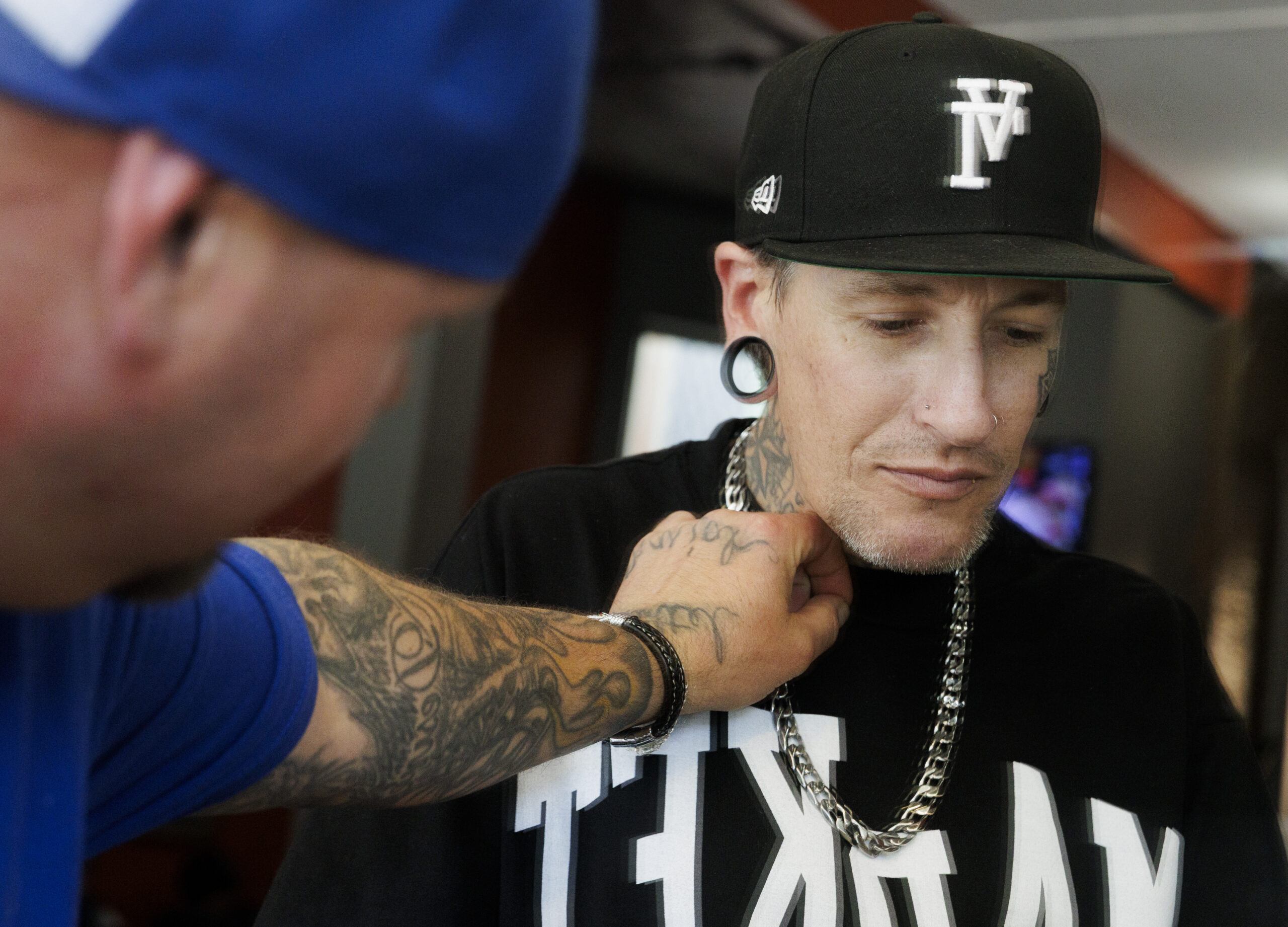
Eventually, it caught up to him. Klahn says he served four years of a seven-year prison sentence after being convicted for killing a rival gang member. He was 17 at the time. Klahn claims him and a friend were confronted at a traffic light and held at gunpoint from his car window. Almost certain he would die; he believed retaliation was his only chance at survival. In the following legal battle, Klahn claims he was convicted with firearm-related charges and gang enhancements. Once Klahn arrived in prison, his beliefs began to change. “I really started to see that it was just bullshit when I got in there,” Klahn said, beginning to dismantle his white-supremacist beliefs. “It made me feel stupid.” Now, when looking in the mirror, Klahn says his tattoos remind him “of a time in my life where I put my life on the line for a cause that is unjust.” - Robert Schneider (left) removes lint from Taylor Klahn’s shirt—seen through a mirror’s reflection—while the pair share a meal inside El Rancho Grande taqueria on Haight Street, Monday, June 1, 2026, in San Francisco, California.
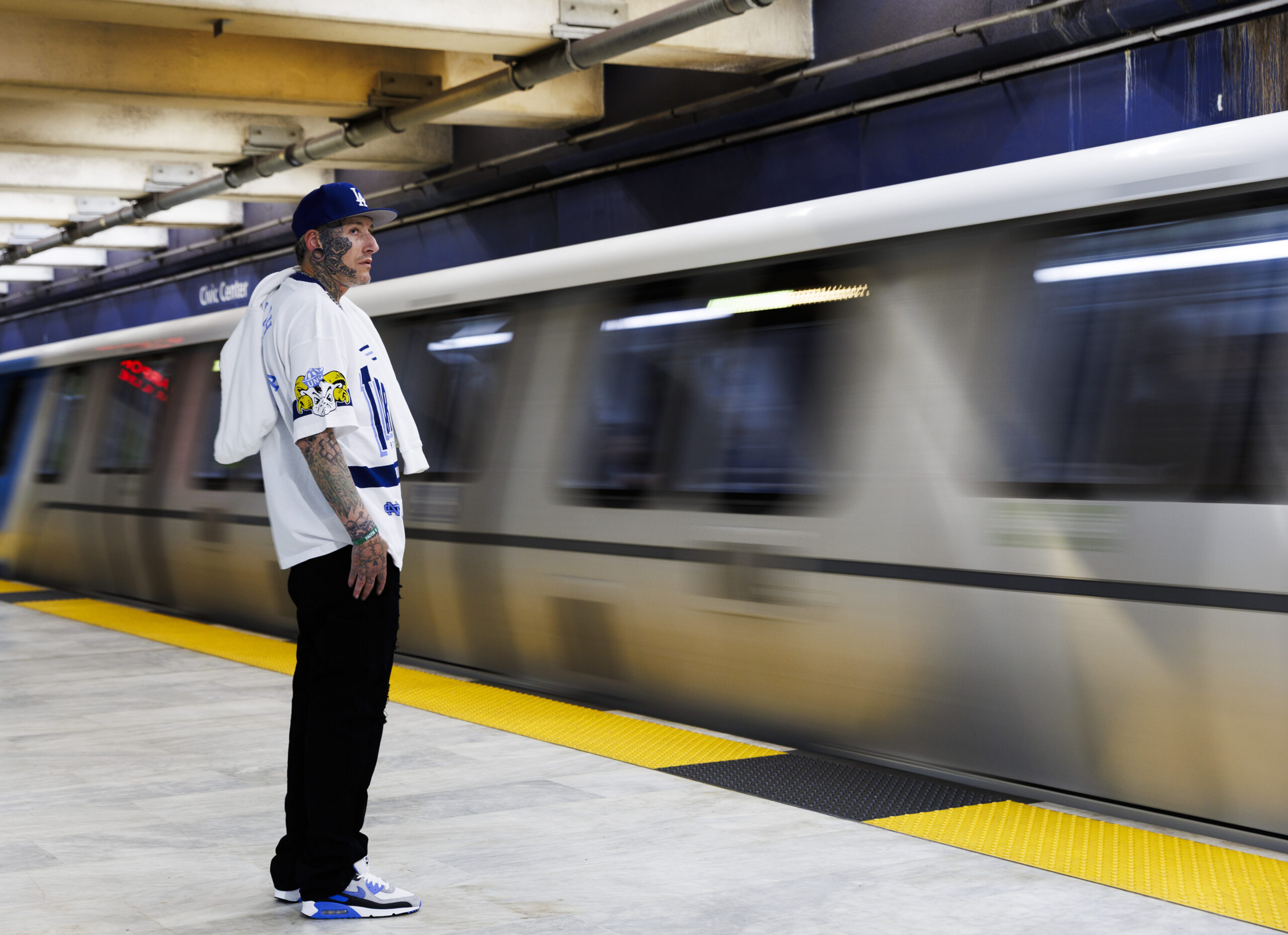
If they had known each other 25 years ago, “We would’ve been trying to kill each other,” said Klahn, who met Schneider in September 2025 at Walden House and bonded over their shared experiences as former gang members in Southern California. “Now, we’re best friends,” Klahn reflected. “He's been through the same shit I have, and now we're building the same path.” - Taylor Klahn watches his train come to a stop at the Civic Center BART station platform on Tuesday, June 2, 2026, in San Francisco, California.
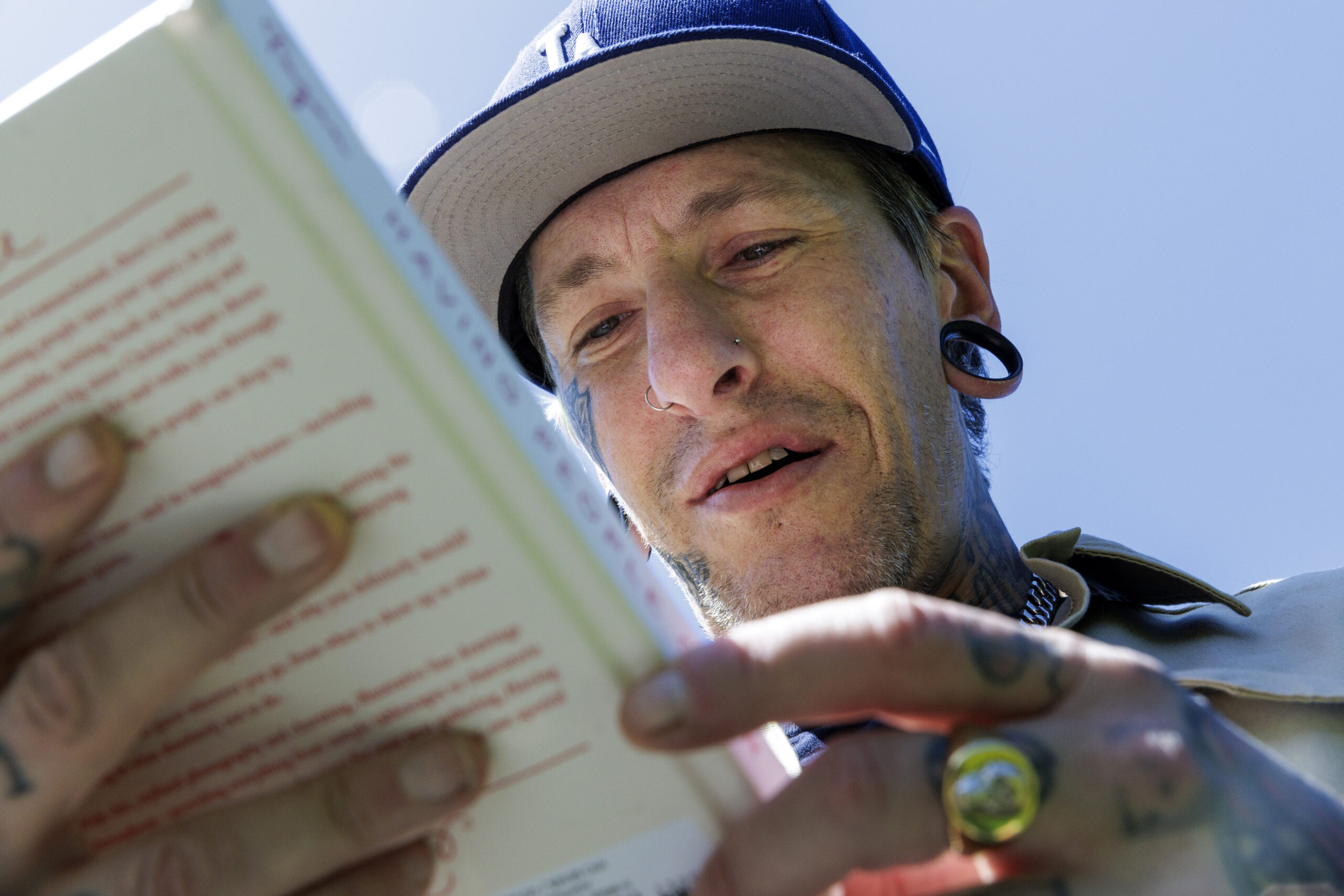
Klahn left his ties to gangs behind after finishing his sentence. During his first week out, Klahn attended a weekday service at a church he happened to be passing by. That day, he doesn’t remember exactly where he was, but he vividly remembers how he felt. “I started crying, dude, like, bawling,” Klahn recalled, “they circled me, they put their hands on me, and they were crying with me,” he said. I’d never felt that type of love from anybody.” For Klahn, it was another turning point in reforming his life. - Taylor Klahn views the cover of ‘Having People Over’ by Chelsea Fagan, a book Klahn found on a bench at the base of Hippie Hill in Golden Gate Park on Sunday, May 31, 2026, in San Francisco, California.
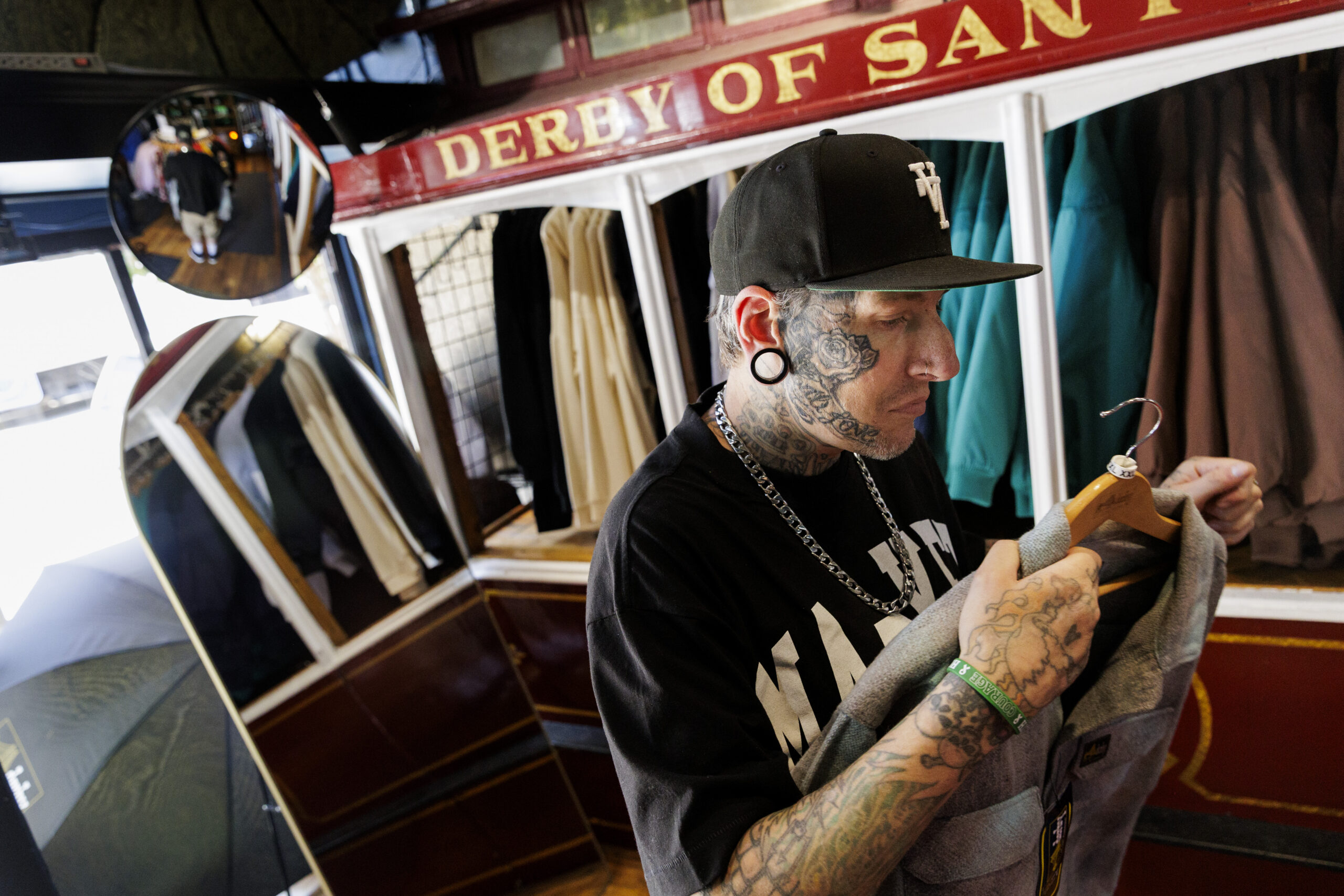
As a teenager, Klahn remembers being told to read literature rooted or associated with white nationalist movements by older, fellow gang members; like William Luther Pierce’s ‘The Turner Diaries’, and Adolf Hitler’s ‘Mein Kampf’. “It's smoke and mirrors, man,” Klahn said. Now, he indulges in history books, which he humanized the people he was taught to hate. For Klahn, it helped him understand that "everybody wants the same thing, to have a good life and provide for your loved ones.” - Taylor Klahn browses through shirts on sale at the Derby Of San Francisco clothing store on Haight Street, Monday, June 1, 2026, in San Francisco, California.
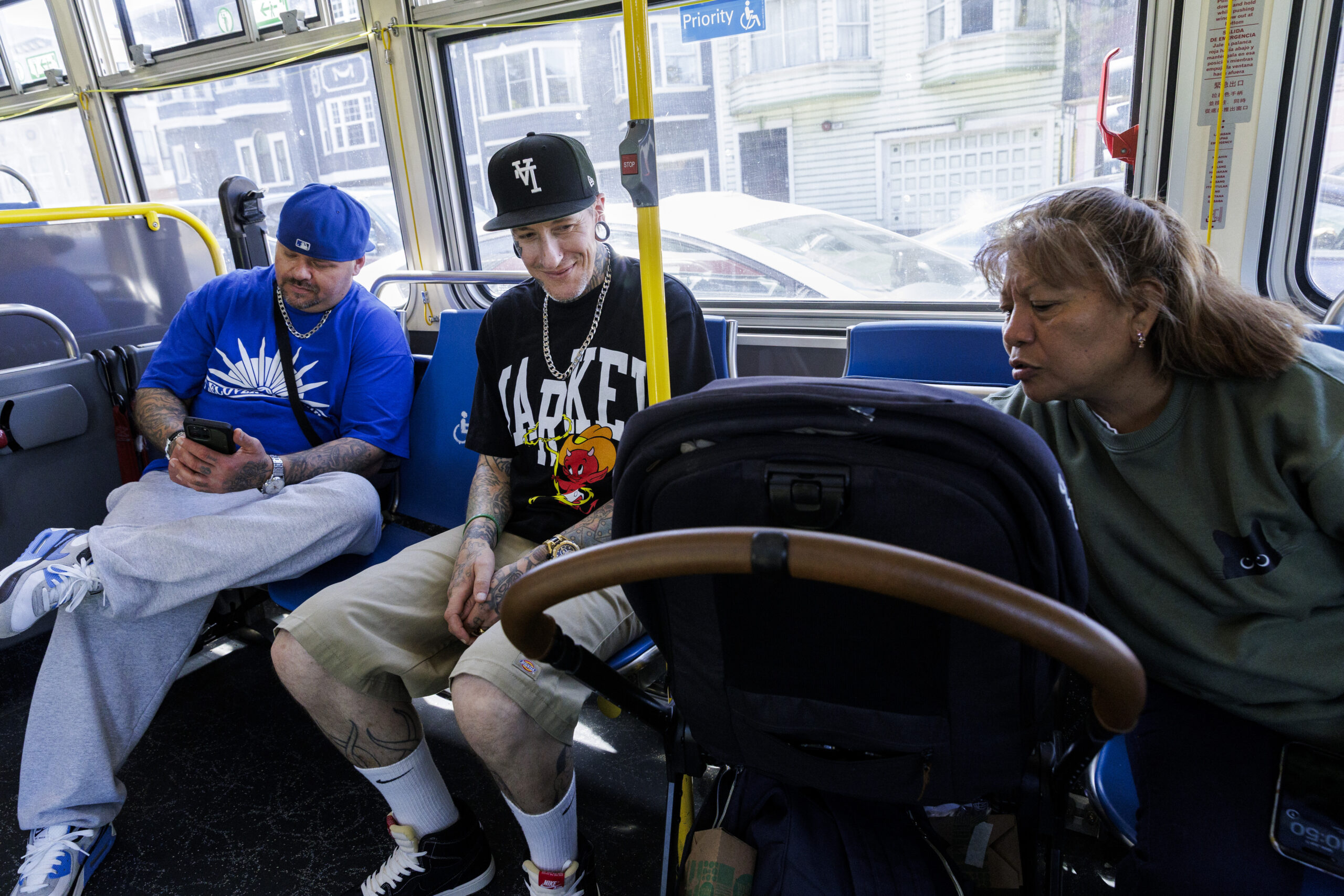
Politically, Klahn identifies closest with the Democratic party. However, he believes that if he was still his 18-year-old self today, he “would have been stoked on Trump,” and the administration’s rapid escalation in ICE detentions and deportations. “I don't get it why people are against immigrants”, Klahn said, reflecting on past and current right-wing movements. “We're all immigrants, dude … we took this land from the Indians,” Klahn continued, emphasizing the value of empathy. “If you're in a really shitty country, and you know that all you have to do to raise your family and get a good living [to] support your family is to cross a border —Anybody would do that, man.” - Taylor Klahn (center), accompanied by his friend Robert Schneider (left), smiles at a baby carried in a stroller while the pair head to the bank to open an account in Taylor’s name on Monday, June 1, 2026, in San Francisco, California.
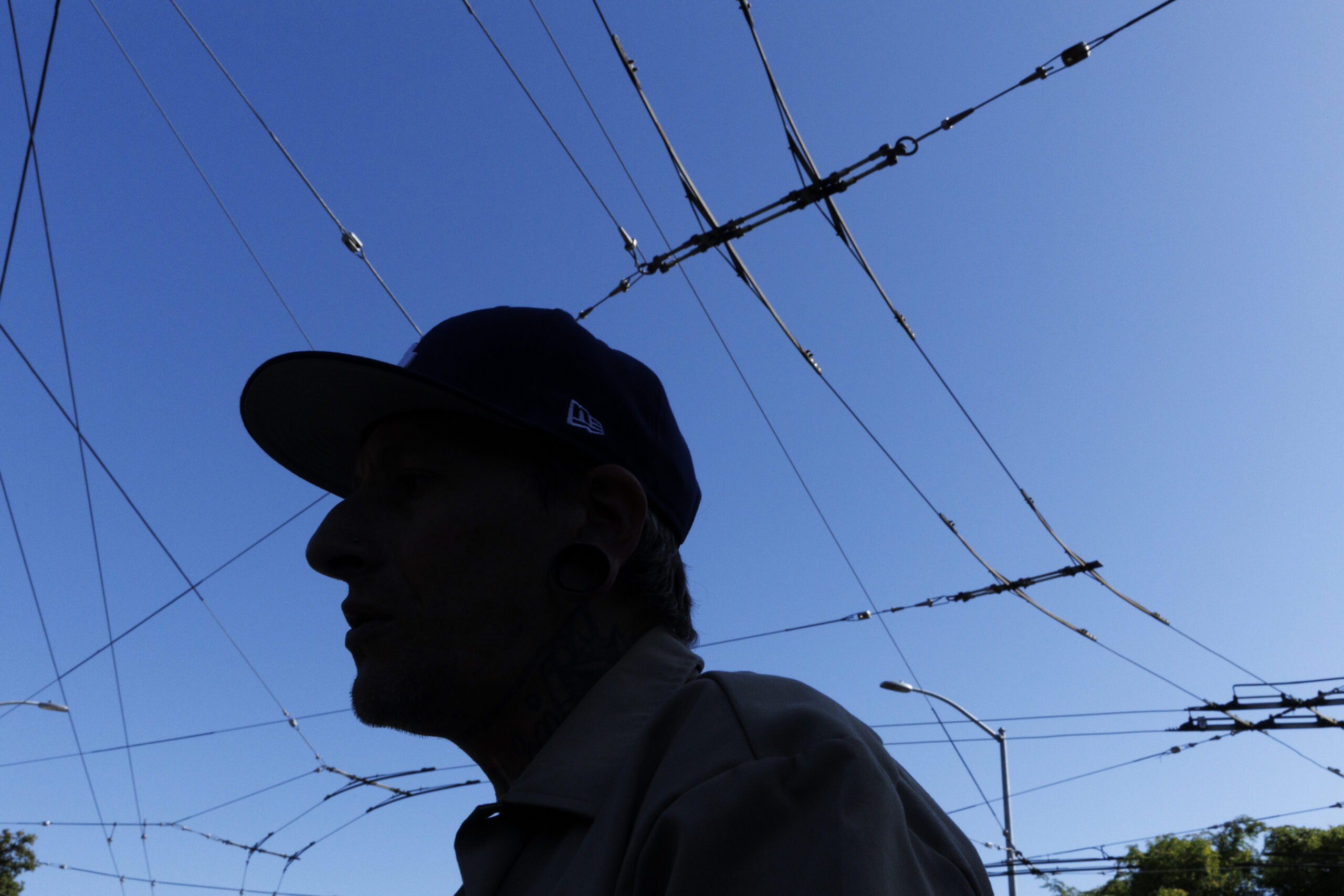
Klahn moved to the Lake Tahoe area after leaving prison, and his son was born a year later. “I remember, I cut his umbilical cord, looking at him, [thinking] there's no way he's gonna go through this shit that I went through.” Klahn says he eventually acquired full custody of his son, now 21, a recent college graduate living in Oregon. - Taylor Klahn, beneath a net of overhead transit power lines, crosses the street on his way into Golden Gate Park on Sunday, May 31, 2026, in San Francisco, California.
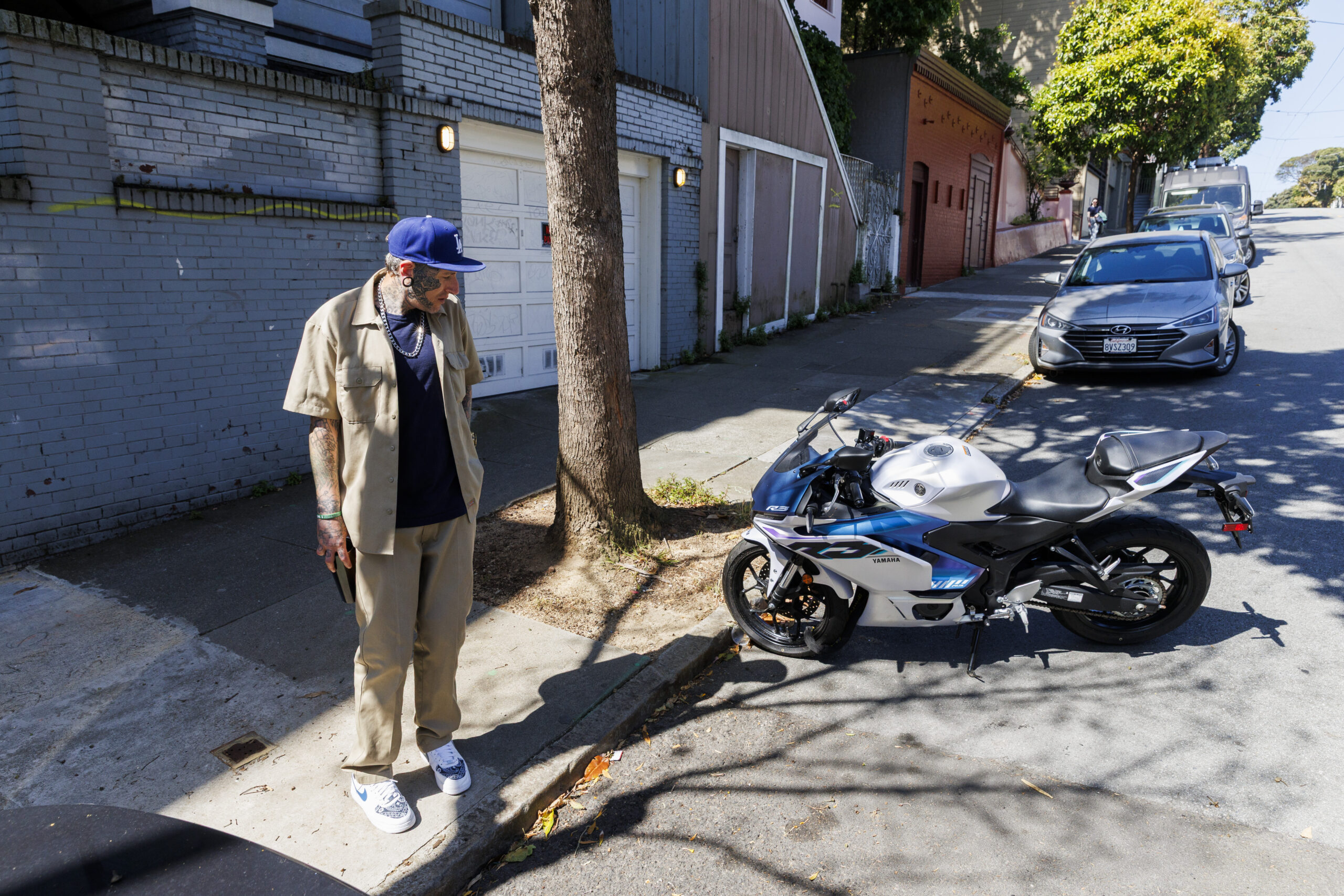
To Klahn, the American Dream is something “In the eye of the beholder.” For him, it’s a life of love, and the freedom to live a dignified life. He hopes to have a job he loves, come home to someone he loves, and raise another child. He’s optimistic with his current career plans and his girlfriend, Joanna. Looking back on the journey he’s taken in life, Klahn says “I think the American dream starts with loving yourself—so you can love others.” - Taylor Klahn checks out a Yamaha R3 motorcycle parked on the side of Haight Street on Sunday, May 31, 2026, in San Francisco, California.
Klahn looks forward to the little things in life too, even if it involves some materialism. He has a fondness for motorcycles, despite not having rode one in over a decade. As he gets back on his feet, he’s certain he’ll own one, one day. “I'm gonna have a Harley, man,” he said. “[Riding a motorcycle] you're one with the road; you got the wind blowing your hair … you feel so free.”