
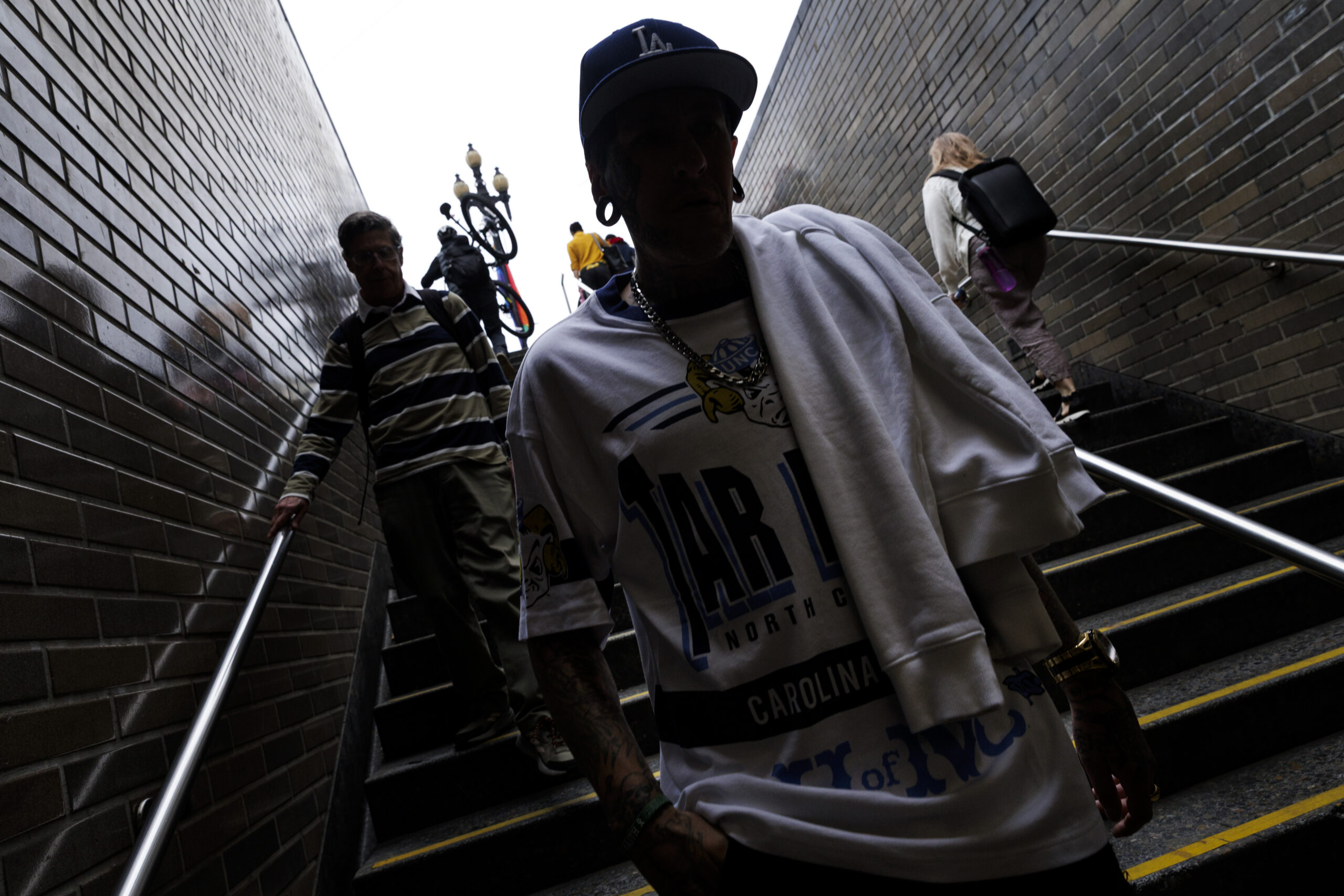
E— Taylor Klahn walks into Civic Center BART Station while on the way to meet up with his girlfriend, Joanna, on Tuesday, June 2, 2026, in San Francisco, California.
For a time, young Klahn was looking to be accepted by the gang more than with his own parents. “When I would get good grades on my report card, I wouldn’t take it home to my parents. I would take it to the [white supremacist gang] house,” he said. “[I’d] say, ‘look, man, I got good grades!’ And they’d be like ‘Oh, I was so proud of you, brother!’ They’d give me a hug. They’d buy me new boots, or they’d buy me some new clothes.”
Eventually, it caught up to him. Klahn says he served four years of a seven-year prison sentence after being convicted for killing a rival gang member. He was 17 at the time. Klahn claims him and a friend were confronted at a traffic light and held at gunpoint from his car window. Almost certain he would die; he believed retaliation was his only chance at survival. In the following legal battle, Klahn claims he was convicted with firearm-related charges and gang enhancements. Once Klahn arrived in prison, his beliefs began to change. “I really started to see that it was just bullshit when I got in there,” Klahn said, beginning to dismantle his white-supremacist beliefs. “It made me feel stupid.” Now, when looking in the mirror, Klahn says his tattoos remind him “of a time in my life where I put my life on the line for a cause that is unjust.”
