
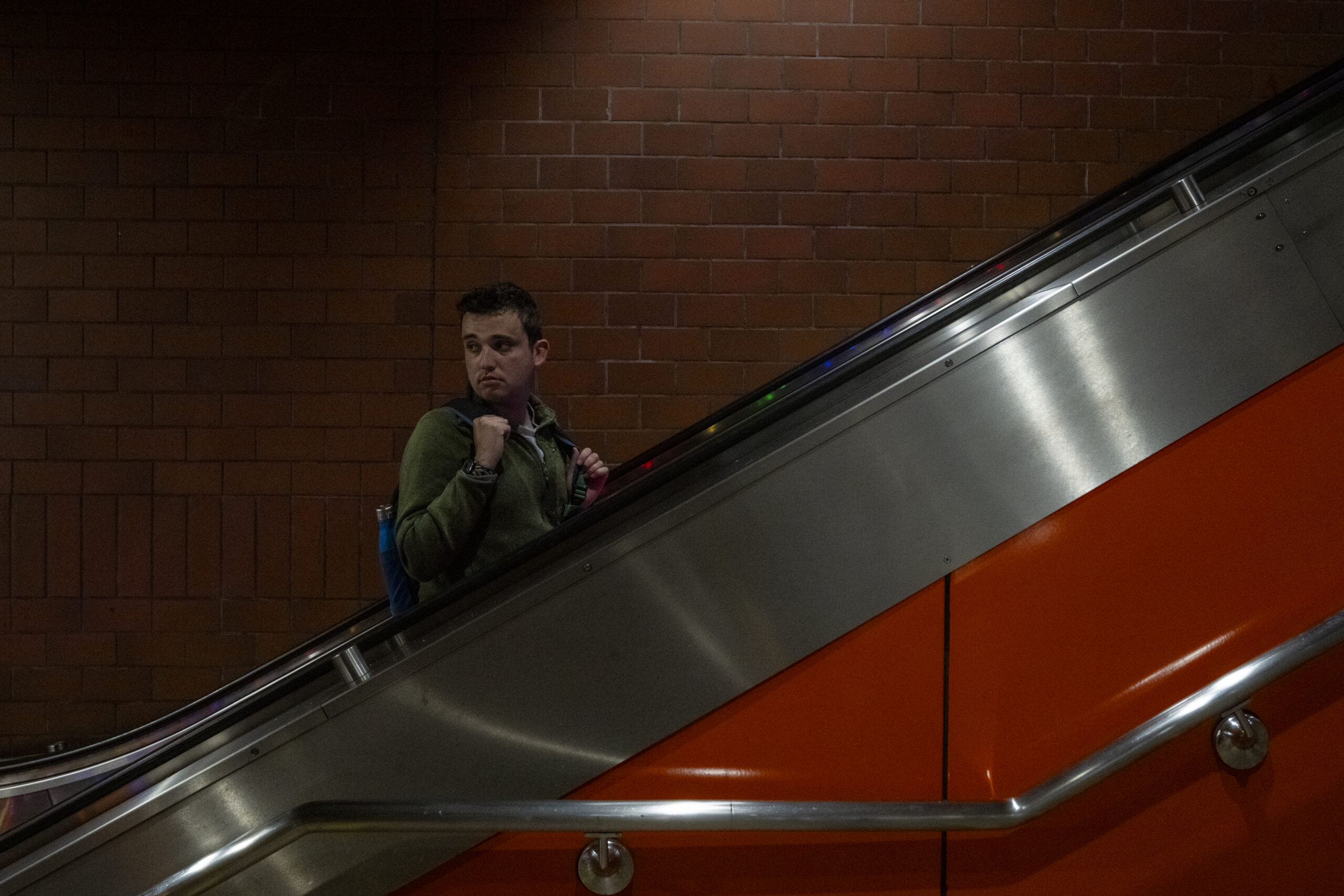
C— Julian Kantor, 22, rides an escalator at the Castro Muni Station in San Francisco, California, on Tuesday, June 2, 2026. While Julian navigates the city’s public transportation system independently, anxiety remains a daily part of his life. Family members and educators say moments of uncertainty, changes in routine or unfamiliar social situations can sometimes cause him to become overwhelmed, even in environments he knows well. For many adults with cognitive disabilities, anxiety may not always appear as nervousness or fear, but instead through repetitive behaviors, difficulty communicating emotions or a heightened need for predictability. “You don’t always know what’s going to trigger it,” said Radka Pulliam, Julian’s teacher and case manager. “But when it happens, it’s real for them.”
