
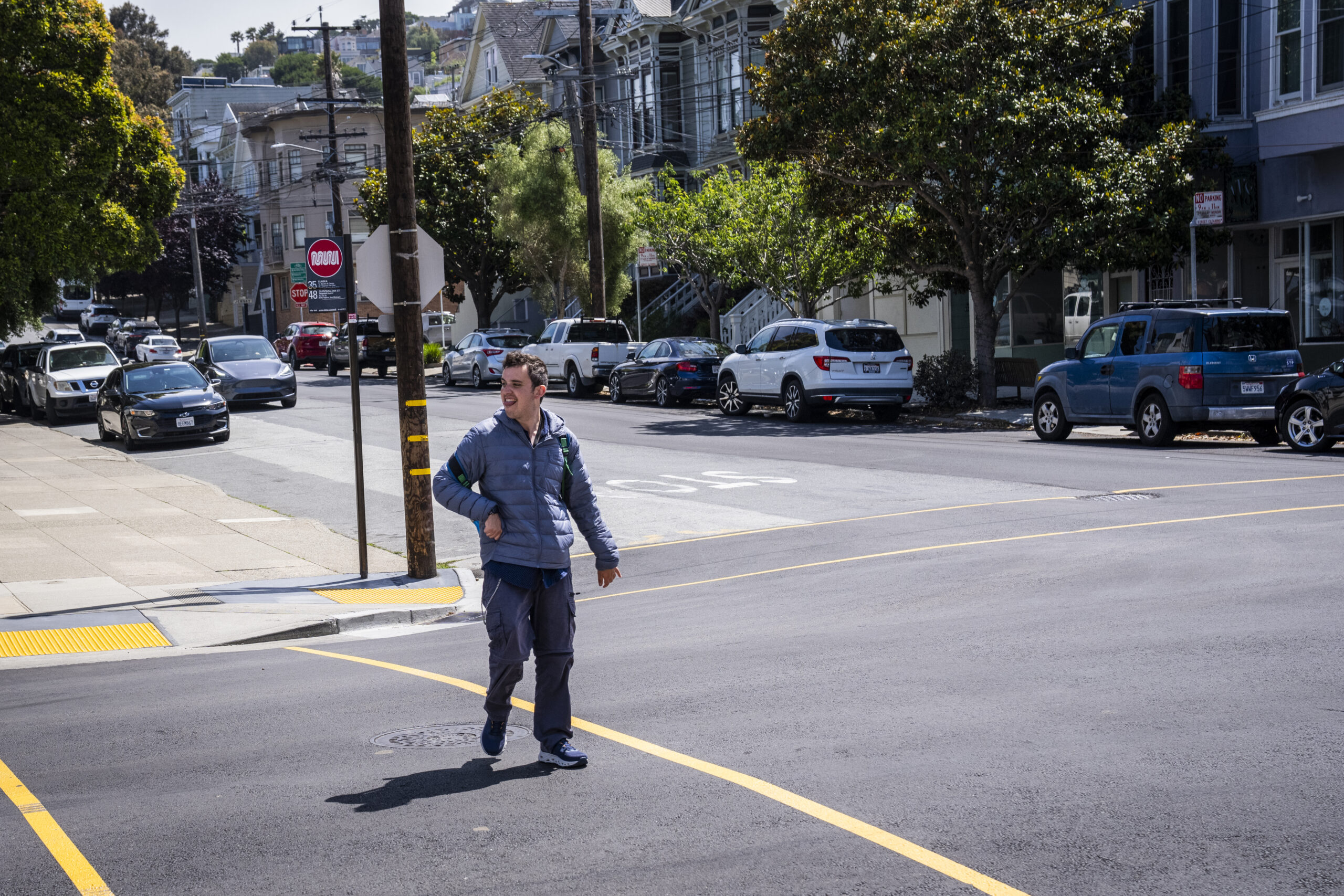
C— Julian Kantor, 22, walks across 24th Street in the Noe Valley neighborhood of San Francisco, California, on Tuesday, June 2, 2026. Throughout San Francisco, accessible pedestrian signals, clearly marked crosswalks and consistent wayfinding systems help residents navigate the city independently. For individuals with cognitive disabilities, those features can provide important cues that make daily travel more manageable. Decades ago, many Americans with intellectual and developmental disabilities were excluded from schools, workplaces and community life altogether. While disability rights legislation has expanded opportunities for inclusion, advocates say people with cognitive disabilities are still too often expected to adapt to systems that were not designed with them in mind. “They have so much to offer to society in general,” said educator Lia McLoughlin, who works with transition-age adults with cognitive disabilities. “They’re often overlooked and underrepresented.”
